PM Surya Ghar Muft Yojana: Everything You Need to Know About India's Rooftop Solar Scheme
For years, installing a rooftop solar system was something many homeowners wanted to do but often postponed because of the upfront cost. While the long-term savings were attractive, the initial investment could feel like a barrier.
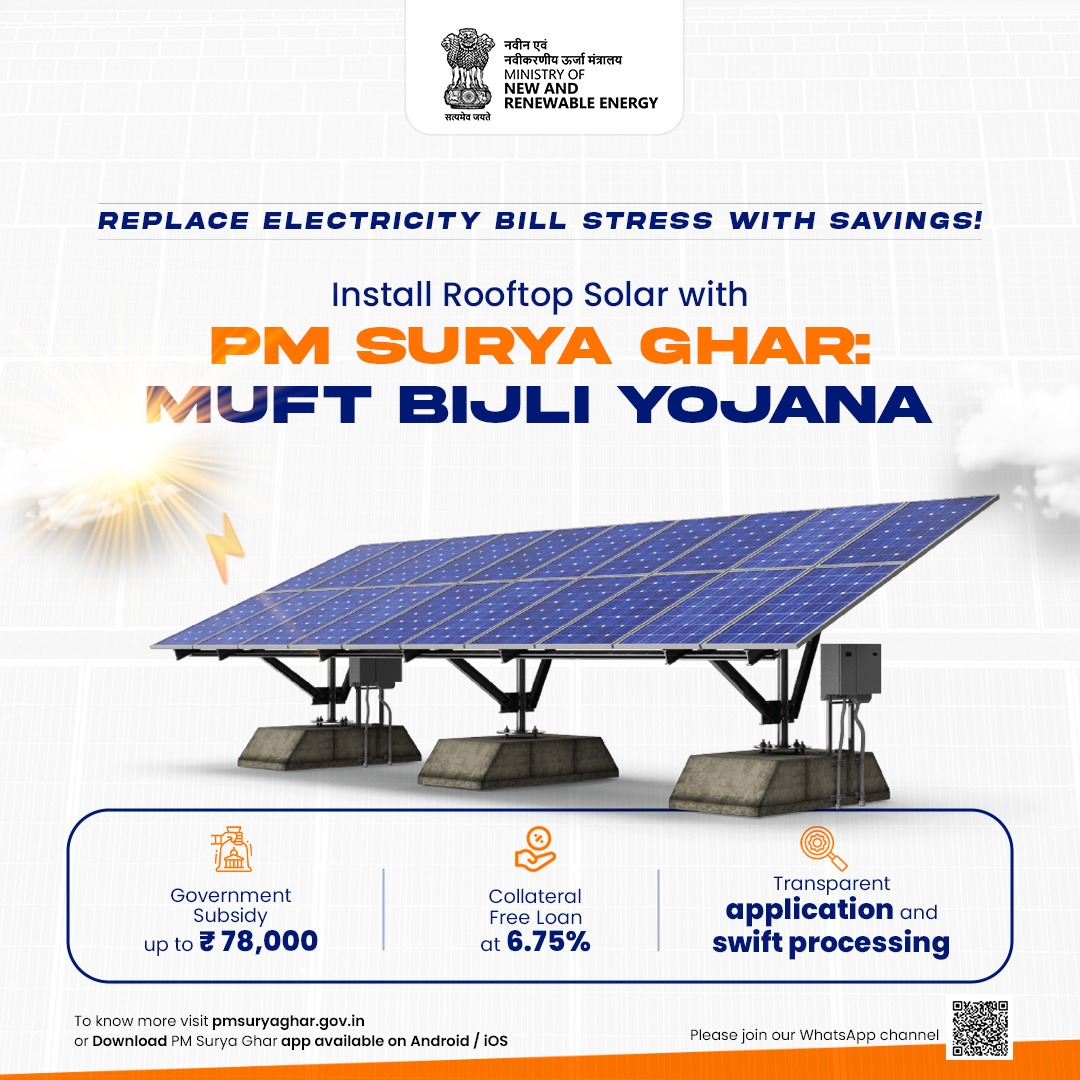
To encourage more households to adopt clean energy, the Government of India introduced the PM Surya Ghar: Muft Bijli Yojana, one of the country's most ambitious rooftop solar initiatives. The scheme is designed to make solar more affordable by offering financial assistance to eligible residential consumers, helping families reduce their electricity bills while promoting renewable energy.
If you've been considering solar for your home, understanding how this scheme works can help you make an informed decision. Here's everything you need to know—from eligibility and subsidies to the application process and key benefits.
What Is PM Surya Ghar Muft Bijli Yojana?
Launched by the Government of India, the PM Surya Ghar: Muft Bijli Yojana aims to encourage rooftop solar adoption among residential households by providing central financial assistance for eligible installations.
The scheme is part of India's broader vision of increasing renewable energy capacity, reducing dependence on conventional power sources, and enabling households to generate their own clean electricity.
Apart from reducing monthly electricity bills, the initiative also supports India's long-term sustainability goals by promoting decentralized energy generation.
Why Was This Scheme Introduced?
India's electricity demand continues to grow every year. At the same time, there's a strong push towards reducing carbon emissions and increasing the share of renewable energy.
The PM Surya Ghar scheme addresses both these objectives by encouraging households to generate electricity from their rooftops instead of relying entirely on the power grid.
The initiative also helps:
- Lower household electricity expenses
- Reduce dependence on fossil fuels
- Promote clean and renewable energy
- Increase rooftop solar adoption across India
- Create employment opportunities in the renewable energy sector
It's a win-win—for homeowners and the environment alike.
Who Can Apply?
The scheme is primarily meant for residential consumers.
To be eligible, applicants generally need to:
- Be an Indian citizen.
- Own a residential property with a suitable rooftop.
- Have a valid electricity connection in their name.
- Install rooftop solar through approved channels under the scheme.
Commercial establishments, industrial units, and institutions are not covered under this residential subsidy program.
How Much Subsidy Can You Get?
The amount of subsidy depends on the capacity of the rooftop solar system installed.
While subsidy guidelines may be updated from time to time, the scheme generally provides financial assistance for residential rooftop systems within specified capacity limits.
Larger systems may still be installed, but subsidy eligibility is usually restricted to the capacity defined under the scheme.
Since subsidy amounts are revised periodically, it's always advisable to check the latest official guidelines before planning your installation.
What Are the Benefits of the Scheme?
Lower Electricity Bills
One of the biggest advantages is the reduction in monthly electricity expenses. Depending on your energy consumption and system size, a rooftop solar installation can significantly reduce your dependence on grid electricity.
Faster Return on Investment
Government financial assistance lowers the initial installation cost, helping homeowners recover their investment sooner while enjoying savings for many years.
Clean and Renewable Energy
Every unit of electricity generated from solar reduces dependence on conventional power sources and supports India's renewable energy goals.
Increased Property Value
A professionally installed rooftop solar system can enhance the long-term value of your home as energy-efficient properties become increasingly desirable.
How Does the Application Process Work?
The PM Surya Ghar initiative offers a streamlined digital application process.
- Register on the official PM Surya Ghar portal.
- Enter your consumer and electricity connection details.
- Submit the required documents.
- Receive technical approval from the DISCOM.
- Select an approved solar vendor.
- Get the rooftop solar system installed.
- Complete inspection and net meter installation.
- Receive subsidy after successful verification.
Following the official process ensures your installation qualifies for financial assistance.
Documents Commonly Required
Applicants are typically asked to provide:
- Aadhaar Card
- PAN Card
- Electricity Bill
- Address Proof
- Identity Proof
- Bank Account Details
- Passport-size Photograph
- Rooftop Ownership Documents (where applicable)
What Is Net Metering?
Net metering allows homeowners to send excess electricity generated by their solar panels back to the grid.
- Solar panels generate electricity during the day.
- Your home uses the electricity it needs.
- Extra electricity is exported to the grid.
- At night or during low generation, electricity is drawn from the grid.
Your electricity bill is calculated based on the difference between the electricity exported and imported.
Choosing the Right System Size
The ideal solar system size depends on your electricity consumption, available roof space, budget, and future energy needs.
Monthly Consumption Suggested System Size Up to 150 Units 1–2 kW 150–300 Units 2–3 kW 300–500 Units 3–5 kW Above 500 Units 5 kW and AboveA professional site survey can help determine the most suitable system for your home.
Common Misconceptions About the Scheme
"The government installs the solar panels for free."
No. The scheme provides financial assistance, but homeowners are responsible for the remaining installation cost.
"Only large houses can install rooftop solar."
Many compact homes with suitable rooftop space can also benefit from solar.
"Solar won't work during the monsoon."
Solar panels continue generating electricity even on cloudy days, although output is lower than on sunny days.
"Solar systems require constant maintenance."
Modern rooftop solar systems require very little maintenance beyond occasional cleaning and routine inspections.
Tips Before Applying
- Compare multiple quotations before choosing a vendor.
- Select an installer approved under the scheme.
- Focus on quality rather than the lowest price.
- Ensure your rooftop is structurally suitable.
- Understand warranty coverage for panels and inverters.
- Estimate future electricity needs before selecting the system size.
The Bigger Picture
The PM Surya Ghar Muft Bijli Yojana is more than just a subsidy program. It's part of India's long-term transition toward cleaner and more sustainable energy.
As rooftop solar adoption increases, households become active participants in electricity generation, helping reduce pressure on the power grid while lowering greenhouse gas emissions.
With improving technology, declining installation costs, and supportive government policies, rooftop solar is becoming an increasingly practical choice for homeowners.
Final Thoughts
The PM Surya Ghar Muft Bijli Yojana has made rooftop solar more accessible than ever before by reducing the upfront installation cost through government financial assistance.
If your home has a suitable rooftop and you're looking to reduce your electricity bills, this is an excellent time to explore the benefits of rooftop solar.
Before applying, understand the eligibility criteria, compare approved installers, and choose a system that matches your energy needs. A well-designed solar installation can continue delivering value for decades—for both your household and the environment.