
Residential Solar: Is a Rooftop Solar System Worth It for Indian Homes in 2026?
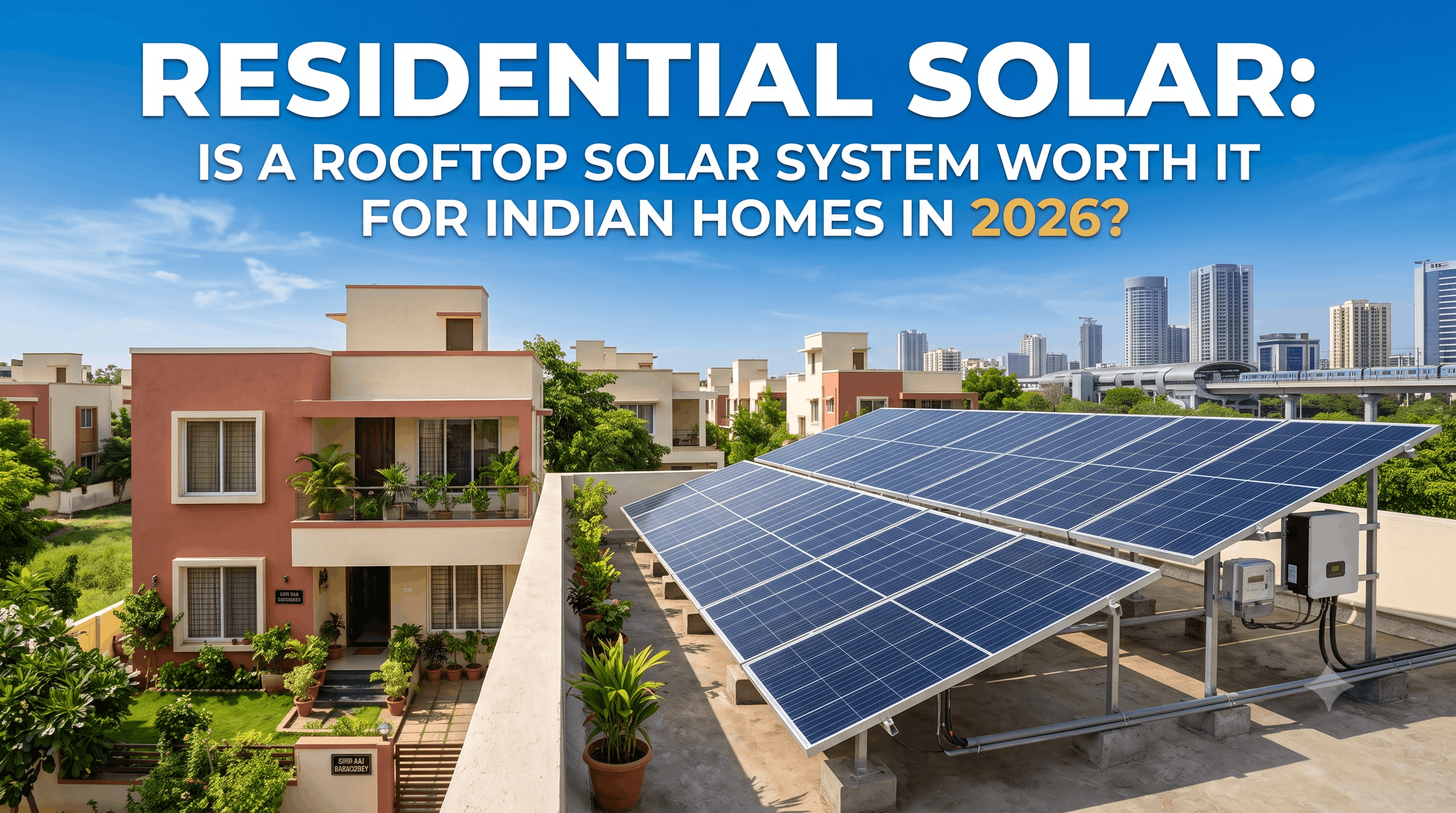
The way Indian households consume electricity has changed dramatically over the past few years. Air conditioners have become common even in smaller cities, electric vehicles are entering garages, and homes today rely on dozens of electronic appliances that run throughout the day. While these conveniences improve our quality of life, they also lead to one unavoidable outcome—higher electricity bills.
For many homeowners, the monthly electricity bill has become a recurring concern. This is where rooftop solar has emerged as one of the smartest long-term investments. Instead of depending entirely on electricity supplied by the grid, homeowners can now generate clean energy right from their rooftops and significantly reduce their monthly expenses.
With government incentives like the PM Surya Ghar Muft Yojana, improved solar panel efficiency, and falling installation costs, 2026 is considered one of the best times to switch to solar energy.
Understanding Residential Solar
Residential solar refers to a rooftop solar power system installed on houses, villas, apartments, or residential societies. These systems convert sunlight into electricity using photovoltaic (PV) panels installed on rooftops.
During daylight hours, the panels generate electricity that powers household appliances. If more electricity is produced than the home consumes, the surplus can often be exported back to the electricity grid through net metering. At night or during periods of low sunlight, electricity can either be drawn from the grid or supplied through a solar battery system.
Why Residential Solar Is Growing Rapidly in India
India receives abundant sunlight for most of the year. Many regions experience over 250 sunny days annually, making solar power an extremely practical solution.
Some of the key reasons behind this rapid growth include:
- Rising electricity tariffs across states
- Government subsidies for rooftop installations
- Better solar technology
- Higher panel efficiency
- 25+ year product warranties
- Lower installation costs than a decade ago
How Does a Rooftop Solar System Work?
A residential solar system consists of five major components.
Solar Panels
Capture sunlight and generate DC electricity.
Solar Inverter
Converts DC electricity into AC electricity used by household appliances.
Mounting Structure
Supports the panels and protects them against varying weather conditions.
Net Meter
Measures both imported and exported electricity.
Solar Battery (Optional)
Stores excess electricity for use during power outages or nighttime.
Benefits of Installing Residential Solar
Lower Electricity Bills
Depending on system size and electricity consumption, homeowners can reduce their electricity bills by 60–90%.
Protection Against Rising Electricity Prices
Electricity tariffs continue to rise every year. Solar allows homeowners to generate their own electricity at a predictable long-term cost.
Excellent Long-Term Investment
Most residential solar systems recover their installation cost within 5–7 years while continuing to generate electricity for more than 25 years.
Environmentally Friendly
Every unit of electricity generated through solar helps reduce carbon emissions and dependence on fossil fuels.
Minimal Maintenance
Cleaning the panels every few weeks and scheduling annual inspections is generally sufficient.
Roof Space Requirements
The required rooftop area depends on the system capacity.
System Size Roof Area Required 1 kW 100 sq ft 2 kW 200 sq ft 3 kW 300 sq ft 5 kW 500 sq ft 10 kW 1000 sq ftChoosing the Right System Size
- 1–2 kW: Small homes consuming around 150 units/month.
- 3–5 kW: Medium-sized households consuming 250–400 units/month.
- 6–10 kW: Large homes with higher electricity usage.
On-Grid vs Off-Grid Solar Systems
On-Grid Solar System
- Connected to the electricity grid
- Lower installation cost
- Supports net metering
- No battery required
Off-Grid Solar System
- Works independently of the grid
- Requires battery storage
- Ideal for areas with frequent power cuts
Understanding Net Metering
Net metering allows homeowners to export excess electricity to the grid during the day and import electricity back when required. Your electricity bill reflects only the net difference, resulting in significant savings.
Is Residential Solar Expensive?
Although rooftop solar requires an initial investment, falling installation costs, government subsidies, and financing options have made it more affordable than ever.
Common Myths About Residential Solar
- Solar doesn't work on cloudy days. It still generates electricity.
- Solar panels need constant maintenance. Only occasional cleaning is required.
- Solar is only for wealthy homeowners. Government subsidies have made it affordable.
- Solar panels damage roofs. Professionally installed systems protect roof integrity.
Things to Consider Before Installation
- Evaluate your monthly electricity usage.
- Check available roof space.
- Compare equipment quality.
- Choose an experienced installer.
- Understand warranty terms.
- Verify subsidy eligibility.
- Check local net metering regulations.
The Future of Residential Solar in India
Advances in solar panel efficiency, battery storage, and smart energy management systems are making rooftop solar increasingly attractive for homeowners. As electricity prices continue to rise, generating clean energy at home will become more important than ever.
Final Thoughts
Residential solar is no longer just an environmentally conscious decision—it is a financially smart investment. Lower electricity bills, government support, long equipment life, and minimal maintenance make rooftop solar one of the best long-term upgrades for Indian homes.