
Solar Panels Explained: Everything You Need to Know Before Investing in Solar
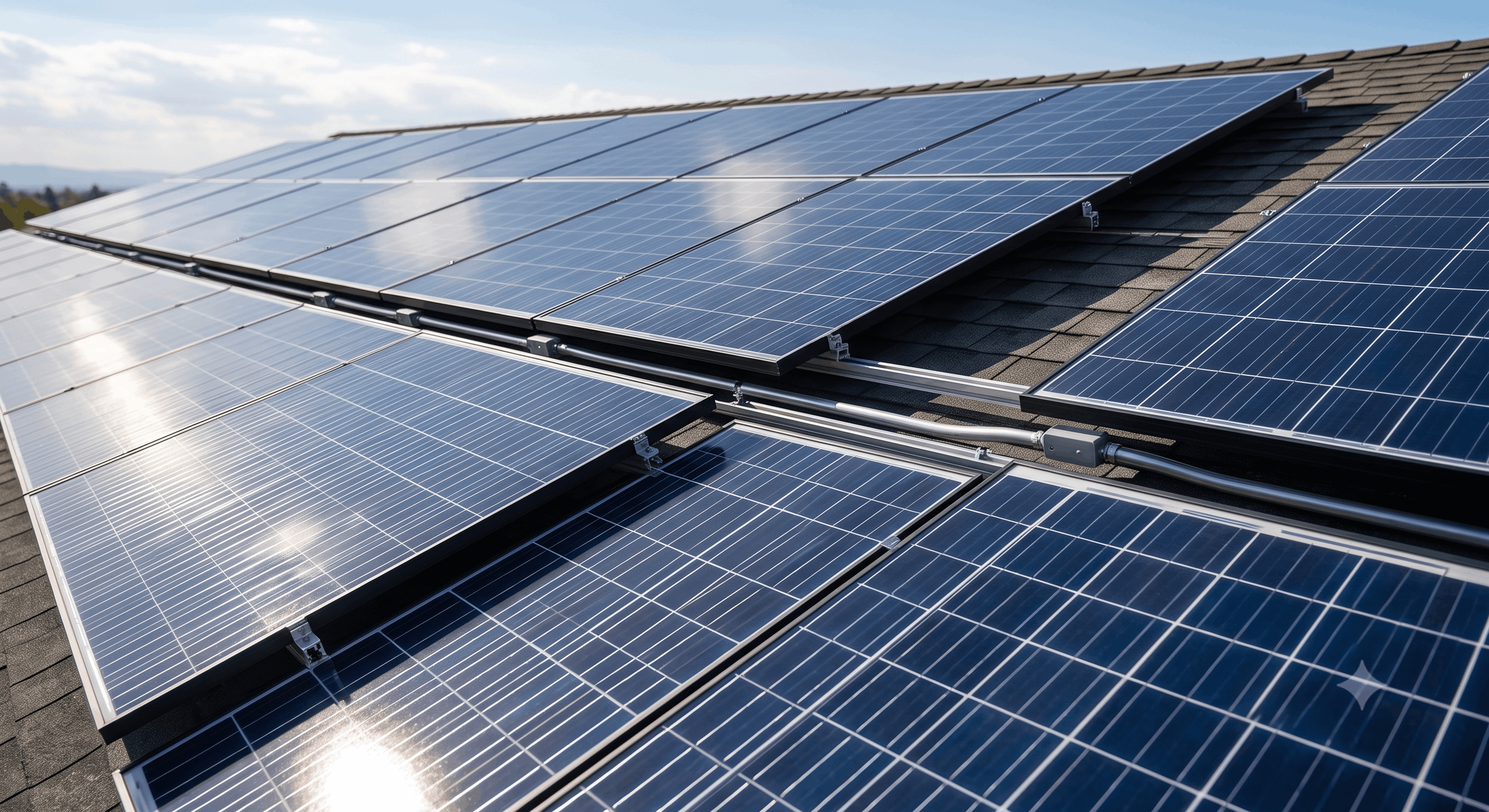
When most people think about installing a solar system, they immediately start comparing prices. Some ask how many panels they'll need, while others look for the highest wattage available.
Surprisingly, very few stop to ask a more important question: Which solar panel is actually right for my home or business?
At first glance, almost every solar panel looks identical—a black or blue rectangle mounted on a rooftop. But beneath that glass surface lies technology that directly affects how much electricity your system produces, how long it lasts, and whether your investment pays off over the next 25 years.
Choosing a solar panel isn't about buying the most expensive option or copying what someone else installed. It's about balancing efficiency, durability, budget, and your property's energy requirements.
If you're planning to switch to solar, understanding the basics of solar panels will help you make a decision you'll be happy with for decades.
More Than Just a Panel on the Roof
A solar panel performs one simple task—it converts sunlight into electricity.
Inside every panel are photovoltaic (PV) cells made from silicon. When sunlight reaches these cells, they generate direct current (DC) electricity. An inverter then converts this into alternating current (AC), which powers your home's appliances and electrical systems.
The process is completely silent. There are no moving parts, fuel, smoke, or emissions. As long as sunlight reaches the panels, they continue generating electricity.
A complete solar system includes multiple panels connected together, along with an inverter, mounting structure, wiring, and safety equipment. The number of panels required depends entirely on your monthly electricity consumption.
Not All Solar Panels Are Created Equal
If you've started researching solar systems, you've probably come across terms like monocrystalline, polycrystalline, and bifacial panels.
Monocrystalline Panels
Monocrystalline panels are currently the preferred choice for most residential and commercial projects. They offer higher efficiency, allowing them to generate more electricity using the same roof space.
Although they have a slightly higher upfront cost, their improved performance often delivers better long-term value.
Polycrystalline Panels
Polycrystalline panels are more affordable and have been used successfully for many years. They perform well on properties with sufficient roof space where maximum efficiency isn't the primary concern.
Bifacial Panels
Bifacial panels generate electricity from both sides by capturing reflected sunlight. They're commonly used in commercial and ground-mounted solar projects where reflected light improves overall energy generation.
For most homeowners, however, the choice usually comes down to monocrystalline or polycrystalline panels.
Does Higher Efficiency Really Matter?
Panel efficiency simply measures how much sunlight can be converted into electricity.
If two panels are the same size, the one with higher efficiency will produce more electricity.
However, efficiency isn't everything. If you have a large rooftop, you may achieve the same energy output by installing additional standard-efficiency panels.
That's why professional installers evaluate roof space, electricity consumption, and budget together before recommending a solution.
A Good Solar Panel Is Meant to Last Decades
One of solar energy's biggest advantages is its lifespan.
Most quality solar panels are designed to operate for more than 25 years. Rather than stopping suddenly, they gradually lose a small amount of efficiency over time.
Many manufacturers guarantee around 80–85% of the original output even after 25 years, with many systems continuing to generate electricity well beyond that period.
What Actually Affects a Solar Panel's Performance?
A solar panel's performance depends on much more than the panel itself.
- Amount of direct sunlight received
- Shade from trees or nearby buildings
- Dust accumulation on panels
- Roof orientation and angle
- Ambient temperature
- Overall system design and installation quality
Regular cleaning and proper system design help maintain maximum electricity generation throughout the year.
Bigger Isn't Always Better
Installing more panels isn't always the best solution. The goal is to install the right-sized system based on your electricity usage.
Average Monthly Consumption Recommended System Size Up to 150 Units 1–2 kW 150–300 Units 2–3 kW 300–500 Units 3–5 kW Above 500 Units 5 kW or MoreThese figures are estimates. Roof space, orientation, and future electricity needs should also be considered.
Before You Compare Prices, Compare These
Price matters, but it shouldn't be the only deciding factor.
- Performance warranty offered by the manufacturer
- Brand reputation and industry experience
- Suitability for Indian weather conditions
- Availability of after-sales service
- Quality of mounting structures, inverters, and electrical components
A well-designed solar system with reliable components almost always delivers better long-term performance than a cheaper installation with lower-quality equipment.
Looking Ahead
Solar panel technology continues to evolve rapidly.
New technologies like TOPCon, HJT, and bifacial panels offer higher efficiencies, improved durability, and better performance under challenging weather conditions.
As innovation continues, homeowners and businesses can expect greater electricity generation from the same roof space and even better long-term returns.
Final Thoughts
Buying solar panels isn't about selecting the newest technology or the highest wattage. It's about choosing a system that matches your energy needs and delivers dependable performance for decades.
A quality solar panel, paired with the right inverter and installed professionally, can generate clean electricity every day with minimal maintenance while significantly reducing your electricity bills.
If you're planning to invest in solar, compare more than just prices. The right solar panel is the one that offers the best balance of efficiency, durability, reliability, and long-term value.