
The Sun Powered Revolution: Why Solar Energy Is Reshaping Our World
Introduction
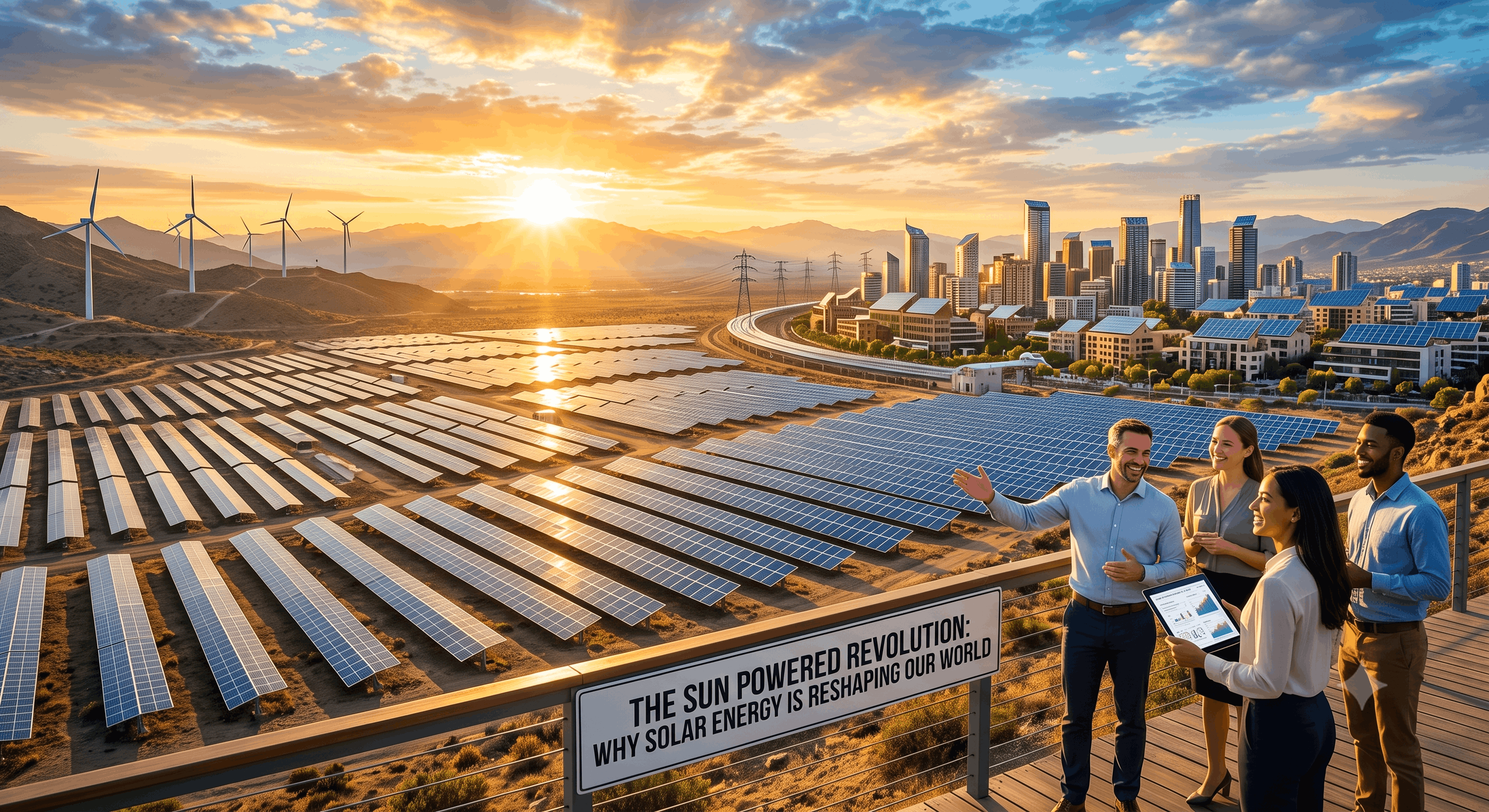
Every hour, the sun delivers more energy to Earth than humanity consumes in an entire year. For most of human history, this staggering resource sat largely untapped, a source of light and warmth but not electricity. Today, that has changed dramatically. Solar energy has moved from a niche technology favored by environmentalists and off-grid enthusiasts to one of the fastest-growing and most cost-effective sources of electricity on the planet. From rooftop panels in suburban neighborhoods to massive solar farms stretching across deserts, the sun is quietly becoming one of our most important power plants.
This shift is not just about environmental idealism. It is increasingly about economics, energy security, and practical necessity. In this post, we will explore how solar energy works, why it has become so popular, the different ways it is being used, the challenges it still faces, and what the future might hold for this remarkable technology.
How Solar Energy Works
At its core, solar energy technology relies on a fascinating bit of physics called the photovoltaic effect. When sunlight strikes certain materials, typically silicon in most commercial solar panels, it knocks electrons loose from their atoms. This movement of electrons creates an electric current. Solar panels are made up of many individual solar cells wired together, and these cells are grouped into arrays to generate meaningful amounts of electricity.
The direct current, or DC, electricity produced by solar panels is not immediately usable by most home appliances, which typically run on alternating current, or AC. This is where an inverter comes in. The inverter converts the DC electricity into AC electricity that can power your home, feed into the electrical grid, or charge a battery storage system.
Beyond photovoltaic panels, there is also a technology called concentrated solar power, or CSP. Rather than converting sunlight directly into electricity, CSP systems use mirrors or lenses to focus sunlight onto a receiver, generating intense heat. That heat is then used to produce steam, which drives a turbine to generate electricity, similar to how traditional power plants work. CSP is mostly used in large-scale utility projects, particularly in sunny regions with vast open land.
Why Solar Energy Has Taken Off
A decade or two ago, solar power was often dismissed as too expensive to compete with fossil fuels. That perception has been turned on its head. The cost of solar panels has fallen by more than 80 percent since 2010, driven by improvements in manufacturing, economies of scale, and advances in materials science. In many parts of the world, solar is now the cheapest source of new electricity generation, even without subsidies.
Several factors have converged to fuel this growth. First, government incentives, tax credits, and favorable policies in many countries have made solar installations more financially attractive for homeowners and businesses alike. Second, growing awareness of climate change has pushed both individuals and corporations to seek cleaner energy alternatives. Third, technological improvements have made panels more efficient, meaning they can generate more electricity from the same amount of space than earlier generations of technology.
There is also a practical dimension to solar's appeal: energy independence. Homeowners with solar panels and battery storage are less vulnerable to power outages and price spikes. Businesses can stabilize their energy costs over the long term rather than being subject to the volatility of fossil fuel markets. Nations that invest heavily in solar can reduce their reliance on imported oil and gas, strengthening their energy security.
The Many Applications of Solar Power
Solar energy is not a one-size-fits-all technology. It shows up in a remarkable variety of forms across different scales.
Residential solar is perhaps the most visible application, with rooftop panels becoming a common sight in many neighborhoods. Homeowners install these systems to reduce their electricity bills, and in many regions, excess power generated during sunny days can be sold back to the grid through a practice known as net metering.
Commercial and industrial solar installations are larger in scale, often covering warehouse roofs, parking structures, or dedicated fields adjacent to factories and office parks. Companies increasingly use solar to meet sustainability targets while also cutting operational costs.
Utility-scale solar farms represent some of the largest energy infrastructure projects in the world today. These massive installations, sometimes covering thousands of acres, feed electricity directly into the power grid and can supply electricity to hundreds of thousands of homes.
Off-grid and portable solar solutions have transformed life in remote areas without access to traditional electrical infrastructure. Small solar setups power everything from rural health clinics and schools to individual homes in developing regions, often paired with battery storage to provide electricity even after the sun sets.
Solar water heating is another practical application, using the sun's heat directly to warm water for household or industrial use, bypassing the need for electricity conversion altogether.
Emerging applications are pushing the boundaries of where solar technology can go. Solar-powered vehicles, solar roads, floating solar farms on reservoirs, and even solar panels integrated into building facades and windows are all being developed and tested. Space-based solar power, which would involve collecting solar energy in orbit and beaming it to Earth, remains a longer-term concept but continues to attract research interest.
Challenges Facing Solar Energy
Despite its impressive growth, solar energy is not without obstacles. The most fundamental challenge is intermittency. Solar panels only generate electricity when the sun is shining, which means solar power output naturally dips at night and during cloudy weather. This variability creates challenges for grid operators who must balance electricity supply and demand in real time.
Battery storage technology has become the primary solution to this problem, allowing excess solar energy generated during the day to be stored and used later. However, large-scale battery storage remains relatively expensive, though costs are falling rapidly as demand grows and technology improves.
Land use is another consideration, particularly for utility-scale solar farms that require significant amounts of space. This has led to growing interest in solutions like floating solar installations on bodies of water, and dual-use approaches such as agrivoltaics, where crops are grown underneath elevated solar panels.
Manufacturing solar panels also has an environmental footprint. The production process requires energy and raw materials, including silicon, silver, and various rare materials, and there are ongoing questions about how to responsibly recycle panels once they reach the end of their operational life, typically after 25 to 30 years.
There are also grid infrastructure challenges. Many existing power grids were designed around centralized fossil fuel power plants rather than the distributed nature of solar generation. Upgrading transmission infrastructure to accommodate large amounts of solar power, especially from remote solar farms, requires substantial investment.
The Road Ahead
Looking forward, several trends suggest solar energy's role will only continue to expand. Researchers are developing next-generation solar cell technologies, including perovskite solar cells, which promise higher efficiency and potentially lower manufacturing costs than traditional silicon-based panels. Bifacial panels, which capture sunlight on both sides, are also gaining traction, squeezing more electricity out of the same physical footprint.
The pairing of solar power with increasingly affordable battery storage is likely to be one of the most significant developments in the coming years, addressing the intermittency challenge and making solar a more reliable, round-the-clock energy source. Smart grid technology, which allows for more sophisticated management of electricity flows, will also help integrate growing amounts of solar power more efficiently.
Many countries have set ambitious targets for renewable energy adoption, and solar is expected to play a central role in meeting these goals. As manufacturing scales up further and technology continues to improve, the cost of solar energy is likely to keep falling, making it accessible to even more households and businesses around the world.
Conclusion
Solar energy represents one of the most promising paths toward a cleaner, more resilient energy future. What was once considered an expensive, niche technology has become a mainstream, cost-competitive power source used everywhere from individual rooftops to massive utility-scale installations. While challenges around intermittency, storage, and infrastructure remain, the pace of innovation and falling costs suggest these hurdles are increasingly surmountable.
Whether you're a homeowner considering rooftop panels, a business looking to reduce operating costs, or simply someone curious about the technology reshaping our energy landscape, solar power offers a compelling glimpse into how we might power our world for generations to come. The sun has always been there, quietly offering more energy than we could ever use. We are finally learning how to make the most of it.